

 13 JANUARY 2023
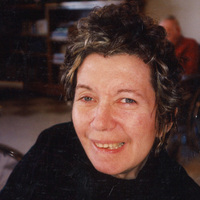
A Mass of Christian Burial for Debbie Buehler was celebrated at Immaculate Conception Parish by its Pastor, Father Terrance Klein. Debbie was laid to rest at Saint Catherine Cemetery in Dubuque, Kansas.
Listen to Debbie's Funeral Homily
| HOW DEBBIE BECAME A LAMB OF GOD | Debbie Buehler |
| Terrance Klein | 13 January 2023 |
We normally narrate a life story from beginning to end, from birth to death, but perhaps, for our purposes, we should take up Debbie’s story on the day that everything turned. Debbie had been married eight years, and her son was only a few months old, when a car ran a traffic light and collided straight into her side of the vehicle.
Debbie would have died that day in central Kansas but a Denver emergency room physician, far from home, happened upon the accident. He saved her life, by performing an emergency tracheotomy on the side of the road.
Debbie was one of four sisters, all of them musically gifted. Debbie could play anything on the piano by ear. Bright and effervescent, Debbie led her sisters in the musical ensemble, which toured about Kansas in the sixties. They were called The Teen Timers and Debbie. Beauty and personality had served-up the world to the teenage Debbie. Upon graduating from high school, the hometown cheerleader went off to study at the University of Kansas, before deciding that cosmetology should be her career.
The brain injury Debbie suffered that day of the accident changed everything. She would live the rest of her life, some forty-four years in nursing care. At first her hometown rallied to provide in home care—surely neighbors could pitch in for the young mother—until it became clear that the extra care could never end. Debbie’s marriage survived the accident by only a few years.
If Debbie’s story had entered a nursing home and long outlived a real life, the moralizing could begin. We should never take life for granted.
But Debbie didn’t slip into silence and shadows. Instead, she became an inspiration to her fellow residents and caregivers. Debbie mastered one handed piano playing. She went to first her son’s school activities and then her grandchildren’s.
At her death, her caregivers posted on Facebook:
she made our home a bright, happy place, full of her energy, faith, and spirit. Now, we are just a little empty without her. Anyone who knew Deb knew what a strong, powerful, faithful woman she was. She could light up a room with her smile. She was amazing and beautiful and incredibly humble. Through all her struggles she never gave up. She did not live by “what if” and “I can’t.” She said through God, all things are possible, and she did it, even if it hurt. Even to the end, she fought hard and then left us tenderly. If you knew her, you were the lucky one. She was our love, our beautiful, beautiful girl, and we will never forget the impact she made in our lives. Everyone has a different treasured memory with her because she made everyone feel special. She was our brightest hello, our hardest goodbye.
So, the moral of the story becomes one of acceptance. When something is not right in our lives, something that can be altered, we should do all that we can to change it. But there is so much in life that does not come round, that takes a turn from which it never recovers. Here, we must learn acceptance.
Saint John’s Gospel has no infancy narratives. The first time we see Jesus is an adult, striding towards us. The Baptist tells us to turn and look:
Behold, the Lamb of God, who takes away the sin of the world (1: 29).
John is a kinsman. That would explain how he has already identified his cousin as the promised Messiah. Much harder to explain is the moniker “Lamb of God.”
Lambs were sacrificial animals. In one verse, the evangelist identifies Jesus, through the mouth of the Baptist, as the Messiah and the suffering servant of God spoken of by the Prophet Isaiah. This Messiah has come among his people to suffer, to be a sacrificial lamb. If God’s people are suffering because of sin, then God himself will offer the sacrifice needed to remove their alienation, to restore them to fellowship with himself. Small wonder, the Baptist tells us to behold the Lamb of God!
As in so much else, it would fall to the genius of Saint Paul to work out the implications of God’s action on our behalf, how we are to respond. He told his flock in Colossae,
in my flesh I am filling up what is lacking in the afflictions of Christ on behalf of his body, which is the church.
Nothing is, or can be, incomplete on the part of Christ in his redemptive suffering. When Saint Paul spoke of filling up what is lacking in Our Lord’s afflictions, he spoke of our own role in the mystery of Christ’s redemptive suffering. We are all called to be Lambs of God, to join our sufferings to his, on behalf of others.
No one escapes the suffering that sin brought into the world. And there are no comparisons to be made between the sorrows of one person and those of another. It wouldn’t be suffering if it didn’t strike each one of us at the core of our being.
Our faith doesn’t take away our suffering. It doesn’t even fully explain it. It simply says that we must look upon the Lamb of God, the lamb sacrificed on the wood of the cross. That’s the enigmatic answer God gives to the question of suffering.
We either choose to imitate Jesus, surrendering our lives to a seemingly absent and indifferent Father, or we close in upon ourselves. We give way to despair.
If we choose the first, we conform ourselves to the Lamb of God. His saving task, the acceptance of his Father’s will, becomes our own. Like Saint Paul, we “fill up what is lacking in the afflictions of Christ on behalf of his body, which is the church.”
When Jesus walked into John’s life, the Baptist surrendered it to him. He became the meaning of that life.
He is the one of whom I said,
“A man is coming after me who ranks ahead of me
because he existed before me.”
I did not know him,
but the reason why I came baptizing with water
was that he might be made known to Israel.
A terrible accident severed Debbie’s life into two pieces. She essentially labeled them: everything I have been given by the Lord and everything that I can give back to the Lord.