

 November 15, 2022
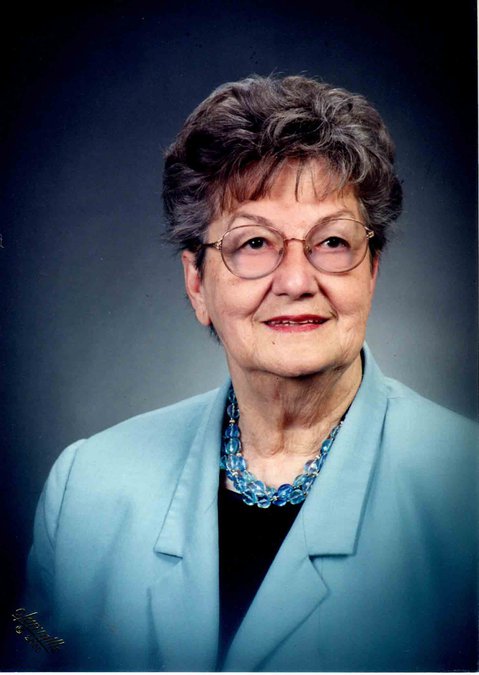
A Mass of Christian Burial was celebrated at Holy Family Church in Odin, Kansas on Tuesday, November 15th, by Father Terrance Klein, for Irene Ann Werner. It was followed by the interment of her ashes in Holy Family Cemetery.
Irene was baptized in our parish and went to school in Odin. She returned here to live later in life before her health made it necessary to move to Arizona to be with her son Tom Panzer.
Also present for the funeral Mass were Father Curtis Carlson, O.F.M. Capuchin, from Victoria, Kansas, where Irene lived for many years, and members representing the Daughters of Isabella Circle 744.
Click here to read the obituary
Click here for an audio of the funeral homily
| Three Truths of the Faith | Funeral for Irene Ann Werner |
| Fr Terrance Klein | Holy Family Church 15 Nov 2022 |
Maccabees 12: 43-46 Romans 5: 5-11 Matthew 11: 25-30
The Mystical Body of Christ. We don’t use the phrase as much as we did in the decades immediately following the 1943 encyclical of Pope Pius XII, Mystici corporis Christi, but we certainly still maintain the teaching. Those who faithfully live out their baptismal promises enter eternity as new and indelible manifestations of Christ. Put another way, each one of the saints, whether known to the wider world or not, is another Christ, a completion of who he was meant to be as the new Adam, the Father of a new creation.
That’s certainly a truth that Irene knew as a Third Order Franciscan. The emblem of the order is the naked arm of Christ crossing the habited arm of Francis, each bearing the nail wounds of the cross in his open hand. It’s a visual manifestation of what the Church came to see, that Francis had lived his life so thoroughly in imitation of his savior that he himself became, as it were, another Christ. That’s who Irene wanted to be as well: someone who lived her life so that in seeing her, others would see another Christ.
There’s a second Catholic truth made patent in Irene’s life: the transformative nature of suffering. God does not will human suffering. It entered our world when we chose to sin, to turn from God. Fully respecting our freedom, God permits suffering, but, as Saint Thomas Aquinas taught, only to achieve some greater good.
Whatever the nuances of our individual, sometimes terribly poignant, experiences of suffering, everything we do in response to affliction comes cannot escape. We can accept it as the will of God for our lives with open arms. Our Lord did that on the cross. The other response to suffering is to shut ourselves up in bitterness, closing our arms to the mystery of God, who comes to those who suffer. Put another way, either we endure in hope or we despair.
Irene contracted polio as a child. That altered the course of her life, no doubt closing many doors to her. It forced her to withdraw from high school. But Irene did not allow suffering to close her heart. She kept her arms open to the Good Lord who had created her. Irene went on to marry Ted and to raise four boys with him. She became a cosmetologist.
Most of all, Irene remained a faithful member of the Church, giving strength to others with her witness. What must it have meant for Irene, to hold the broken body of the Lord in her hands and to offer it to another, suffering member of Christ’s Church.
I close with a third truth, one adumbrated in our first reading and clearly recalled in this month of November. Judas Maccabees takes up a collection among his soldiers “to provide for an expiatory sacrifice” for their fallen comrades. We Catholics have always prayed for our dead.
You can still find inscriptions in the Roman catacombs in which faithful, deceased Christians ask that prayers be offered for them. Here we return to the truth with which we began: the mystical body of Christ. If we can and should pray for each other in life, because we are members of one another in Christ, why should that lively concern cease in death? As we say in the opening of the funeral vigil, “all the bounds of friendship and affection which knit us together in life do not unravel with death.”
We pray for the dead, that God receive their souls and make them ready for the fullness of his love. We cIreneot describe it, but purgatory is the portal of heaven. Dante Alighieri tells us that its denizens smile because they know that their salvation is assured. They are being readied for a love and a life in God they could never have imagined.
This is what we remember in November. This and the fact that the dead pray for us, even as they undergo purgation and ever more so when they stand fully glorified before the throne of God.
Many years ago, Irene was baptized in this Church. This is where she made her First Communion. We pray that she stands, even now, on the other side of this altar, the side we cannot yet see, save with eyes of faith. The side where Christ himself offers his sacrifice surrounded by all his saints and angels.
We do not simply remember our dead at the altar of God. Here we encounter them. Here they and we sup with the Lamb. This is why we look to Irene, who has been our good example on earth to be our unceasing advocate in heaven.